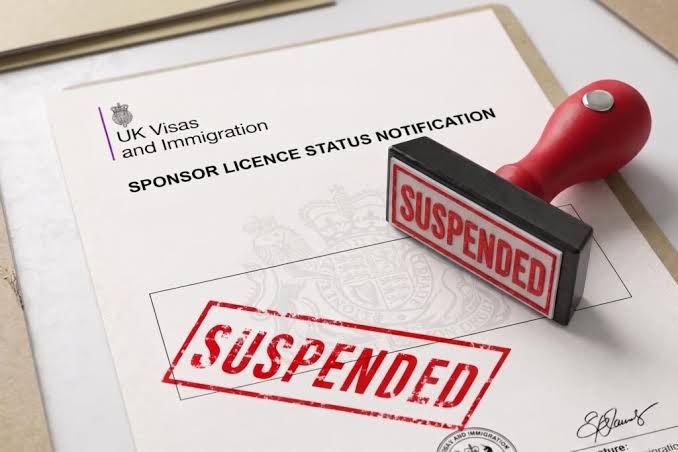
Sponsor Licence Revoked Over Alleged “Underpayment” – Revocation Withdrawn in 24 Days
A sponsor licence is one of the most valuable permissions a UK business can hold – enabling employers to recruit overseas talent. However, holding a sponsor licence itself brings significant compliance obligations, including the need to maintain accurate records, report relevant changes and ensure that working arrangements match the information provided to the Home Office. If a licence is revoked, it can be highly damaging, hinder your ability to rely on overseas talent or even put your whole business at risk.
This case study tells the real-life story of how a thriving UK dental practice saw its sponsor licence revoked over alleged salary non-compliance following a move to staff self-employed arrangements, and how we successfully challenged that decision – securing a withdrawal of the decision in just 24 days.
The case shows how seeking the right legal advice helped save the business and allowed it to emerge in a stronger, more informed and organised position. We use this case to provide our own, targeted insights on the key lessons for sponsor licence holders seeking to reduce risk, safeguard their business and support their workforce.
In this article
- Understanding the Risk of Sponsor Licence Revocation
- How a Leading Dental Practice Lost Its Sponsor Licence
- Why Did the Home Office Take This Action?
- Where Did the Dental Practice Go Wrong?
- Our Role – How We Successfully Challenged the Revocation
- What are the Key Takeaways for Sponsors?
- How We Can Help Sponsors Reduce Risk
Understanding the Risk of Sponsor Licence Revocation
In recent years, the Home Office has increased scrutiny of sponsor licence holders through compliance activity, checks and stricter enforcement – with the ability to assess compliance through visits, information held on the sponsorship system and checks against HMRC data.
Where serious compliance concerns arise, the consequences can be severe. Licences may be suspended or revoked, sponsored workers can face uncertainty over their immigration status and businesses can lose access to key staff, with little prior notice.
Significantly, there is no statutory right of appeal against revocation. However, depending on the circumstances, a sponsor may have other routes to challenge a decision – including Judicial Review.
How a Leading Dental Practice Lost Its Sponsor Licence
The story begins with a thriving UK dental practice group operating multiple sites, serving more than 70,000 active patients and delivering a high volume of important dental care.
The business had sponsored a substantial number of overseas workers on skilled worker visas – which included dentists, dental therapists, dental hygienists, dental nurses and receptionists (under the sponsorship rules applicable at the time). With treatment bookings high and large volumes of work already scheduled, the practice relied heavily on its sponsored workforce.
But, whilst attending the wedding of one of his sponsored workers overseas, the practice owner received devastating news – the Home Office had revoked the group’s sponsor licence with immediate effect. This decision meant that, unbeknown to him, the groom himself may have been locked out of returning to the UK.
The consequences were immediate. Sponsored workers faced uncertainty over their immigration status and significant volumes of patient care, including NHS commissioned treatment, were placed at risk.
For a healthcare provider with a specialist workforce that could not easily be replaced, the implications were profound. The future of the business, its staff and the end patients who relied on its services was suddenly in doubt.
Why Did the Home Office Take This Action?
The warning signs came before revocation.
The Sponsor Licensing Unit (SLU) first issued a Notice of Concern – not a suspension or revocation, but a clear warning that the Home Office was considering revoking the licence unless satisfactory evidence could be provided.
Its key concern was salary compliance. The Home Office suspected that some sponsored workers had not been paid in line with the salaries stated on their Certificates of Sponsorship (CoS).
Specifically, it believed that:
- three sponsored workers in dental nurse and receptionist roles had been paid below their CoS salaries
- in some months, those workers appeared not to have been paid at all
- relevant changes had not been reported to the Home Office.
The practice was required to provide extensive evidence – including employment contracts, bank statements and salary records.
The SLU relied upon a mandatory revocation ground applying where sponsored workers are paid below the salary stated on their CoS and either the reduction has not been reported or is not otherwise permitted under the Immigration Rules or sponsor guidance. Mandatory revocation grounds can result in immediate revocation without warning.
These were serious allegations. Sponsors must comply with salary requirements and report relevant changes, including reportable salary changes, to the Home Office.
However, in this case, the real position proved far more complex.
Where Did the Dental Practice Go Wrong?
The owner had moved large parts of the workforce from PAYE employment to self-employed arrangements.
In principle, this was not necessarily incompatible with sponsorship. A sponsored worker may, in appropriate circumstances, be engaged on a self-employed basis under a genuine contract for services, provided the relevant sponsorship requirements are met.
The difficulty (and risk) lay in how the workforce changes were implemented.
The practice did not fully understand or action the relevant sponsor licence implications.
In particular:
- the new arrangements were not properly reported through the Sponsor Management System (SMS)
- sponsorship records were not aligned with actual working arrangements
- relevant workforce changes were not reported to the Home Office
The move away from PAYE created a further problem. When the Home Office requested payroll records and PAYE-generated documents, (including P60s) many simply did not exist because the workers had been treated as self-employed.
The practice also still needed to maintain appropriate evidence of contractual arrangements and payments.
This is especially important given that the Home Office regularly checks HMRC data to ensure sponsored workers are being paid appropriately. Discrepancies between sponsorship information and payroll or payment records can attract scrutiny.
Importantly in this case (whilst there had been clear compliance failures) there was nonetheless no evidence of worker exploitation or systematic underpayment. Two of the three workers in question had actually been paid more than the salary stated on their CoS over the relevant period. A small outstanding balance existed for the third worker and was due to be corrected immediately.
So, a key issue was whether the practice could clearly evidence its position and challenge the decision.
Our Role – How We Successfully Challenged the Revocation
We were instructed just two days after the Notice of Concern and immediately began work. A sponsor licence revocation can have immediate and serious consequences. The business can no longer sponsor migrant workers, and existing sponsored workers may have their permission to stay cancelled or shortened – leaving them with limited time to find a new sponsor or leave the UK.
As such, the stakes were high and the pressure was on. The business treated more than 70,000 active patients and relied heavily on sponsored clinical staff.
While substantial compliance failings had occurred, we quickly identified an important distinction between poor compliance and worker exploitation. That distinction of course did not excuse the sponsor’s failures, but it helped shape our tactical strategy.
Given the immediate impact of revocation, we concluded that the reconsideration process identified in the decision would not provide a sufficiently timely remedy.
On the very same day as the revocation decision was issued, we submitted an urgent Pre-Action Protocol Letter for Judicial Review. This meant we had to work hard and fast, determined to protect our client.
Our challenge focused upon factual errors in the decision and the evidence. We emphasised how the facts did not support important aspects of the Home Office’s findings. Significant weight appeared to have been placed on the absence of PAYE records, despite those records not existing under the self-employed arrangements.
We also emphasised that the practice had already started correcting its failings before revocation, including returning sponsored workers to PAYE and providing evidence which the Home Office had acknowledged receiving.
There was also an interesting wider public service element which we identified. The practice delivered important NHS commissioned dental care, allowing us to highlight the potential disruption to patient services if its sponsored workforce was lost. This was by no means a workforce that could be easily replaced. While these aspects did not override the sponsor rules, they helped form part of the wider context to paint a picture of urgency of the case.
We were delighted that our hard work to present strong arguments paid off and the challenge succeeded. Within just 24 days of our Pre-Action Protocol Letter, the Home Office withdrew the revocation decision and confirmed that the sponsor licence would be reinstated within 20 working days.
The practice retained its sponsored workforce and continued operating without Judicial Review proceedings ever being issued. The decision was withdrawn before sponsored workers became aware of the revocation, potentially saving the entire business but also saving the owner from having extremely difficult conversations with the valued team.
Today, the business learns from its past lessons and remains thriving – but now also strongly prioritises sponsor licence compliance, staying organised and up to date with legal requirements, with our ongoing support.
What are the Key Takeaways for Sponsors?
This case highlights the utmost importance of sponsor licence compliance. Problems can arise without any deliberate wrongdoing where sponsors lose sight of reporting obligations, record-keeping requirements and internal controls. What makes this case noteworthy is how it establishes that sponsors can face severe enforcement action not only for what they do wrong, but also for what they fail to monitor, record or report.
Sponsors should therefore treat immigration compliance as a core governance role and not risk the severe implications that can come with neglecting sponsorship duties.
Key lessons which can be learned include:
Keep Sponsorship Records Aligned with Business Practices
Sponsors should regularly review sponsored roles, salaries, working arrangements and reporting histories to ensure Home Office records accurately reflect the true workforce position. Any changes to employment status, contractual arrangements, pay or working practices should be considered carefully from an immigration perspective before they are implemented. Businesses should also seek advice before ownership, merger or restructuring changes. Sponsor licences are not transferable, and corporate changes can trigger separate reporting and sponsorship consequences.
Prioritise Reporting Duties
Reporting obligations should be treated as a core compliance responsibility. Relevant worker changes generally must be reported within 10 working days and relevant organisational changes generally within 20 working days. Clear internal processes help ensure changes are reported through the SMS on time.
Focus on Evidence
Sponsors need evidence of compliance. Businesses should maintain accessible payroll or payment records, right to work evidence, personnel files and sponsorship records so they can respond quickly if the Home Office requests evidence. They should also ensure required records remain readily available, rather than assuming accountants, payroll providers or advisers will supply them when needed.
Audit Compliance Regularly and Stay Updated
Sponsors should routinely audit SMS records, right to work evidence, payroll or payment records and sponsored-worker files. This is particularly important because sponsorship eligibility can change over time.
It is also crucial to stay up to date with the sponsor guidance. Sponsor duties and compliance requirements change regularly. Employers should therefore ensure their Authorising Officer understands the latest guidance and reviews their processes whenever the rules are updated.
Take Legal Advice
Sponsors who seek advice early are often more able to resolve issues before they become enforcement problems. Advice should be taken before significant workforce changes are implemented. Changes to contractual status, pay, duties, hours or working arrangements can engage immigration, employment and tax considerations simultaneously, and sponsors must also comply with wider UK law, including employment law. A sensible course of action is to take preventative legal advice before implementing key workforce changes – both from an employment and immigration law standpoint. Specialist immigration advisers can also assist with sponsor licence applications and ongoing licence management, particularly given how challenging navigating the relevant rules can be in practice.
How We Can Help Sponsors Reduce Risk
This case shows how sponsor licence problems can move quickly and the results can be severe. The consequences could have extended far beyond the sponsor itself – also impacting workers, their families, as well as patients dependent on the services.
If your business receives a suspension or revocation notice, or if you wish to review your compliance before the Home Office does, seeking professional advice as quickly as possible may make all the difference.
We advise employers on all aspects of sponsor licence compliance – including Skilled Worker sponsorship, right to work obligations and handling Home Office enforcement action (including challenging complex revocation cases). Importantly, we also help businesses take a proactive approach to review their compliance systems, assess reporting obligations, prepare for compliance visits and understand the immigration implications of workforce changes.
We strive to help educate our clients and help them with building practical compliance frameworks that support the workforce, withstand regulatory scrutiny and reduce long-term risk.
If your sponsor licence has been suspended, downgraded, or revoked, see our Sponsor Licence Compliance Crisis Hub for specialist help.
This case study provides a high-level and simplified summary of a technical legal matter and is intended for general information only. It does not constitute legal advice and should not be relied upon as such. Certain facts may have been summarised or simplified for clarity and confidentiality purposes. UK immigration law and sponsor licence issues are complex, fact-specific and subject to change. Businesses should therefore seek tailored legal advice to assess their own immigration and sponsor licence circumstances and should not rely on this case study or the facts or outcome described in it when making any legal or compliance decisions.
See what some of our clients say!

We maintain an exemplary rate of successful cases, as recognised by our clients. Read more about their experiences.
WHY CROMWELL WILKES



 Trustindex verifies that the original source of the review is Google.
  Trustindex verifies that the original source of the review is Google.
  Trustindex verifies that the original source of the review is Google.
  Trustindex verifies that the original source of the review is Google.
  Trustindex verifies that the original source of the review is Google.
  Trustindex verifies that the original source of the review is Google.
  Trustindex verifies that the original source of the review is Google.
  Trustindex verifies that the original source of the review is Google.
  Trustindex verifies that the original source of the review is Google.
  Trustindex verifies that the original source of the review is Google.
 CONTACT CROMWELL WILKES IMMIGRATION LAWYERS
CONTACT CROMWELL
WILKES IMMIGRATION
LAWYERS
Cromwell Wilkes is ready to assist if you need expert work visa legal advice. We offer consultations by phone or in person at our London office.
Contact us today to discuss your situation and learn how we can help you achieve your immigration goals.
If you plan to launch, grow, or invest in the UK, expert legal support for your UK work visa application can make all the difference.